- PA Newsletter
- Posts
- Courtyards Form The Heart of Architecture
Courtyards Form The Heart of Architecture
Exploring the Evolving Role of Courtyards as Spatial Cores in Architecture.
Dear PA reader,
Courtyards have stepped beyond passive voids and are seen as the spatial core of architecture across cultures and scales.
The House of Time reframes the courtyard as a temporal core, shaping light, movement, and daily rituals through a central open void.
A rural library in India uses a courtyard as a shared learning space, creating an inclusive, climate-responsive environment rooted in community interaction.
DIB Bangkok integrates courtyard-like spatial breaks to balance dense urban conditions with calm, inward-focused art experiences.
Wooden Wonders Pavilion merges timber construction with open courtyard logic, connecting material heritage with breathable spatial design.
Alhambra exemplifies courtyard mastery, using water, symmetry, and geometry to create sensory and spiritual depth.
Iztapalapa PILARES activates courtyards as social infrastructure, encouraging gathering, learning, and neighborhood identity.
Isabella Stewart Gardner Museum centers its experience around a lush courtyard, blending nature with layered gallery circulation.
Across these diverse projects, architecture is no longer isolated from-making, but an integrated response to climate, history, culture, material innovation, and urban transformation.
🚀 If you are looking to learn about computational design, PAACADEMY offers everything you need under one Full-Access membership. Be sure to check it out!
Natura Futura’s The House of Time Reframes Living Through Space and Time

A Rural Library in India is a Courtyard of Knowledge Anchored in Community

DIB Bangkok Completed by WHY Architecture as City’s First International Art Museum
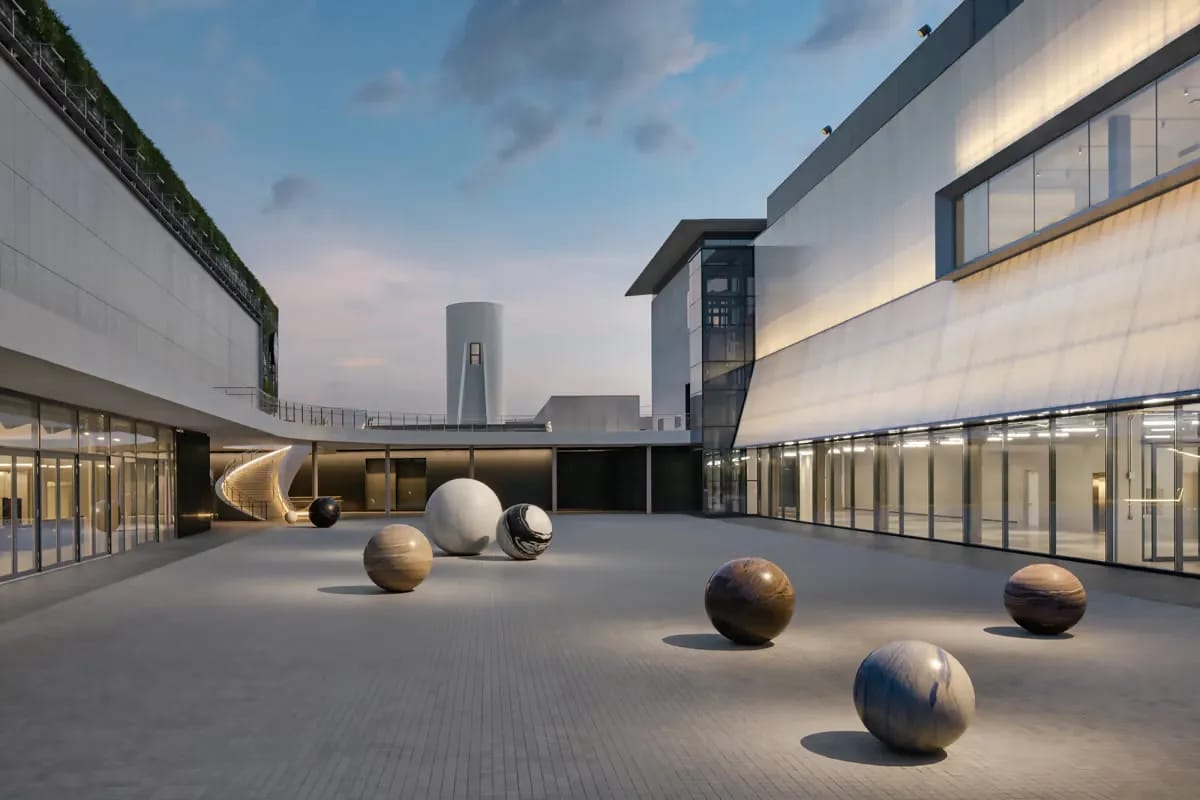
MVRDV’s Wooden Wonders Pavilion Showcases Taiwan’s Timber Heritage

 3D-Printed Wall SystemsThis workshop focuses on the design of bespoke, production-ready interior wall systems. Participants will investigate how a simple 2D concept can be translated into a fully articulated 3D textured surface through algorithmic logic. The workshop is scheduled for April 18 & 19, 2026. |  AI City Urban Design in Grasshopper & ComfyUIThe workshop introduces current trends in the use of generative AI in architectural design and answers the questions: why use AI, and what tools can be utilized to create a complex project with AI?s. The workshop is scheduled for May 23-24 & 30-31, 2026. |
Alhambra: A Living Tapestry of Power, Poetry, and Geometry in Islamic Spain

Iztapalapa PILARES: Terracotta Concrete Community Center by Fernanda Canales

Inside the Isabella Stewart Gardner Museum in Boston
